Most companies that ask about social-enterprise venues are looking for something specific: a way to align an unavoidable expense (the off-site, the conference, the team retreat) with a commitment they’ve already made elsewhere — ESG goals, community investment targets, supplier diversity policies. The annual leadership retreat happens either way. Whether that spend lands at a hotel chain or at a venue that funnels its revenue into a community programme is a real choice.
Social-enterprise corporate retreat venues are a newer category in the events market. The model is straightforward: the venue operates as the commercial arm of a non-profit or community organisation, and the booking revenue funds something with public value. For companies looking to make that choice deliberate, the supply is smaller than the demand, but the venues that do operate this way tend to be specific about it.
What a social-enterprise venue actually is
The distinction matters. A social-enterprise venue isn’t a for-profit business that donates a percentage to charity. It’s a venue operated by a non-profit organisation as part of how that organisation funds its mission. The structure differs from a corporate donation programme in three ways:
The venue’s commercial revenue flows directly to the non-profit, not to corporate shareholders
The mission is governance-level, not marketing-level — the board and operators are accountable to the cause, not to growth targets
The financial relationship is transparent: companies can usually see how much of their booking goes where
Some social-enterprise venues run on a community-trust model. Others operate as a registered non-profit’s commercial division. Both work as long as the financial flow is clear.
Why companies are asking about this
The shift over the past five years has been measurable. Procurement teams now field questions about supplier sustainability and community impact that they used to ignore. ESG reporting requires more granular data about where corporate spend lands. Boards ask about social licence as part of risk management. And employees — particularly in younger cohorts — pay attention to where their employer chooses to spend its discretionary budget.
A social-enterprise corporate retreat venue is one of the few categories where a company can make a values-aligned choice without adding cost or sacrificing quality. The day still runs. The food is still good. The AV still works. The difference is that the cheque the company writes at the end funds a community programme rather than a hotel chain’s next earnings call.
What this means for the company booking
For a company evaluating a social-enterprise venue, the practical implications:
The story is credible and citable. The communications team can point to the booking in an ESG report, an internal newsletter, or a sustainability update. The detail is concrete: this much money went to this programme, which does this work, accountable to this organisation.
The pricing is competitive with comparable for-profit venues. Social-enterprise venues don’t generally charge a premium for the model; their costs are similar to comparable venues, and their pricing reflects the market. The values alignment isn’t a luxury surcharge.
The on-site team is invested in the mission. Because the venue is structurally part of a non-profit, the people running events tend to know the cause well and reference it naturally. That can change the tone of the day in small ways — an introduction at the start, a brief on the programme during a break, or simply a visible connection between the venue and what it supports.
The contract terms are usually straightforward. Non-profit operators have simpler contract structures than corporate hospitality groups. There’s no upselling pipeline behind the booking.
The credibility test
Not every venue claiming a community connection is a social enterprise. The line between cause marketing and structural mission alignment is real, and procurement teams asked to verify the claim should ask three questions:
Is the venue operated by or wholly-owned by a registered non-profit, charitable organisation, or community trust? Ask for the legal entity name and registration.
What percentage of the venue’s revenue funds the mission, and how is it accounted for? Real social enterprises can produce a clear answer; vague claims don’t hold up.
What does the mission actually fund? A specific programme, with public details, beats a generic claim of “community impact.”
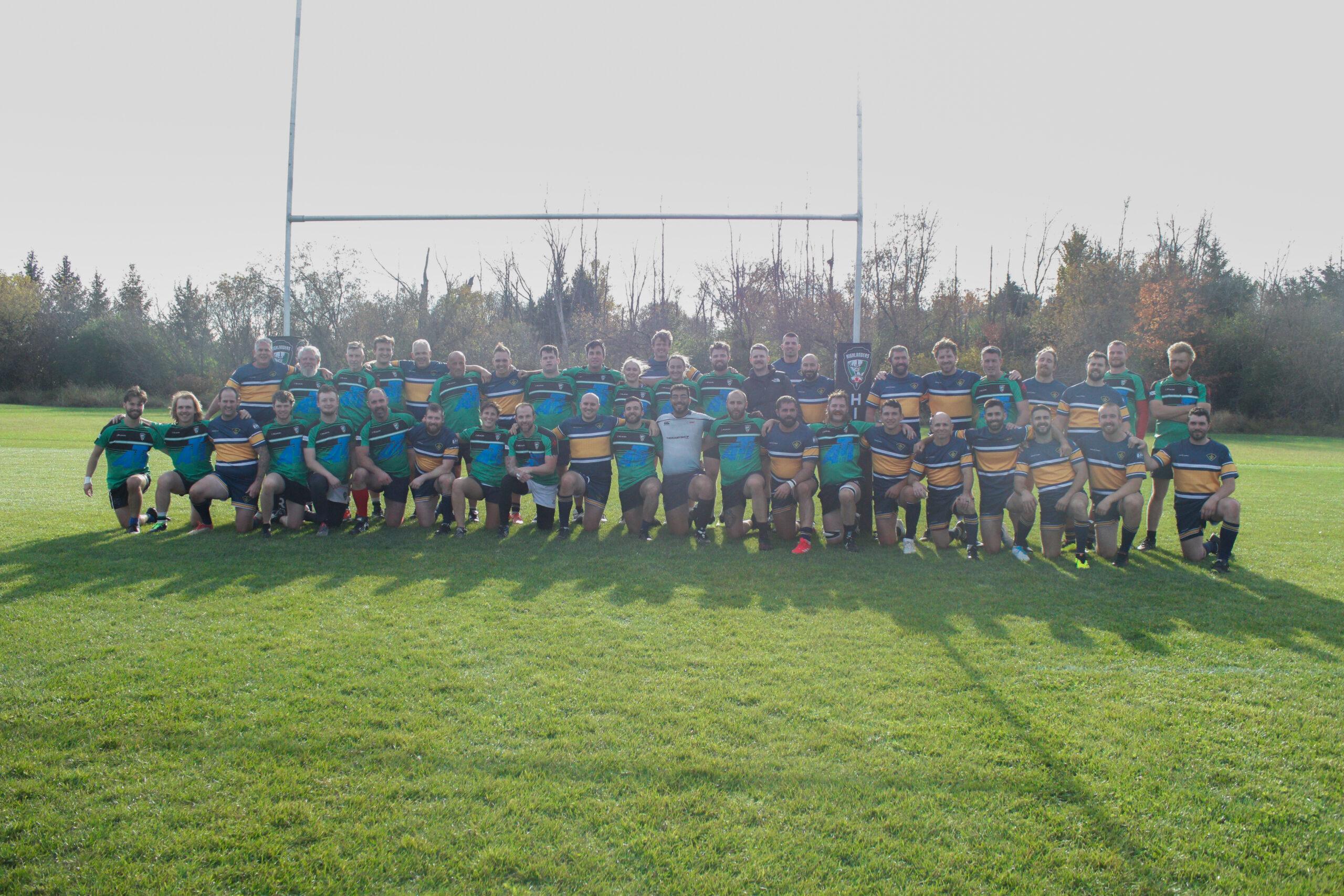
Oakfield Park, an hour west of Ottawa, runs the model directly: the venue is operated by the Lanark Rugby Association, a Canadian not-for-profit, and commercial booking revenue funds youth rugby and leadership development programmes in Lanark County. Read more about how the venue supports the rugby programme.
The categories where this matters most
Not every corporate event needs to be a values-aligned booking. The categories where the social-enterprise venue conversation comes up most often:
Annual leadership retreats and planning sessions, particularly for companies with explicit ESG commitments
Sales kick-offs and team events at organisations where employee perception of values-alignment matters
Client appreciation events for sustainability-focused or community-focused clients
Board offsites and senior team meetings where the booking itself sends a signal
Partner conferences where the venue is part of the message
For these events, the social-enterprise choice is rarely a sacrifice. The venue does the work either way. The only thing that changes is where the money goes afterward.
Frequently asked questions
What is a social-enterprise venue?
A social-enterprise venue is a commercial event venue operated by a non-profit organisation, charitable foundation, or community trust as part of how that organisation funds its mission. The venue runs like any other commercial venue — bookings, contracts, professional staff — but the revenue flows to the non-profit’s mission rather than to corporate shareholders. The model is distinct from venues that simply donate a portion of profits to charity.
Are social-enterprise venues more expensive than commercial venues?
Generally no. Social-enterprise venues compete on price with comparable for-profit venues in their market, because their operating costs are similar. The values alignment isn’t a luxury surcharge. Companies booking these venues should expect rates in line with other rural or destination venues of equivalent quality, not a premium.
How does a company verify a venue’s social-enterprise claim?
Three questions confirm the structure: who legally operates the venue (a registered non-profit or charitable organisation), what percentage of revenue funds the mission and how it’s accounted for, and what specific programme the funding supports. Real social enterprises can answer all three with documentation; vague answers usually mean a marketing claim rather than a structural model.
Can a social-enterprise venue booking count toward ESG or community-investment reporting?
For most ESG frameworks, yes, but the specifics depend on the reporting standard the company uses. The booking is generally classifiable as community investment or supplier-diversity spending, with the documentation provided by the venue’s operating non-profit. Companies should confirm with their reporting team before assuming a specific classification, but the data point is usually usable.
Booking a venue
If you’re evaluating a social-enterprise corporate retreat venue for a leadership offsite, planning session, or team event, the practical first step is the same as for any venue: a site visit. The mission alignment is a real consideration, but the operational basics still need to hold up.
Oakfield Park is a rural event venue and four-pitch rugby ground in Lanark County, about an hour from Ottawa.
It is owned and run by the Lanark Rugby Association, a registered not-for-profit. Every booking funds youth rugby, mentorship, and leadership programming in the county.
Multi-sport field rental near Ottawa for rugby, soccer, flag rugby, and ultimate. How a rugby-grade pitch handles multiple sports and what tournaments need.
Rural celebration venues near Ottawa for milestone birthdays, retirements, anniversaries, and family reunions. What scale, catering, and outdoor flexibility actually need to look like.
To provide the best experiences, we use technologies like cookies to store and/or access device information. Consenting to these technologies will allow us to process data such as browsing behavior or unique IDs on this site. Not consenting or withdrawing consent, may adversely affect certain features and functions.
Functional Always active
The technical storage or access is strictly necessary for the legitimate purpose of enabling the use of a specific service explicitly requested by the subscriber or user, or for the sole purpose of carrying out the transmission of a communication over an electronic communications network.
Preferences
The technical storage or access is necessary for the legitimate purpose of storing preferences that are not requested by the subscriber or user.
Statistics
The technical storage or access that is used exclusively for statistical purposes.The technical storage or access that is used exclusively for anonymous statistical purposes. Without a subpoena, voluntary compliance on the part of your Internet Service Provider, or additional records from a third party, information stored or retrieved for this purpose alone cannot usually be used to identify you.
Marketing
The technical storage or access is required to create user profiles to send advertising, or to track the user on a website or across several websites for similar marketing purposes.