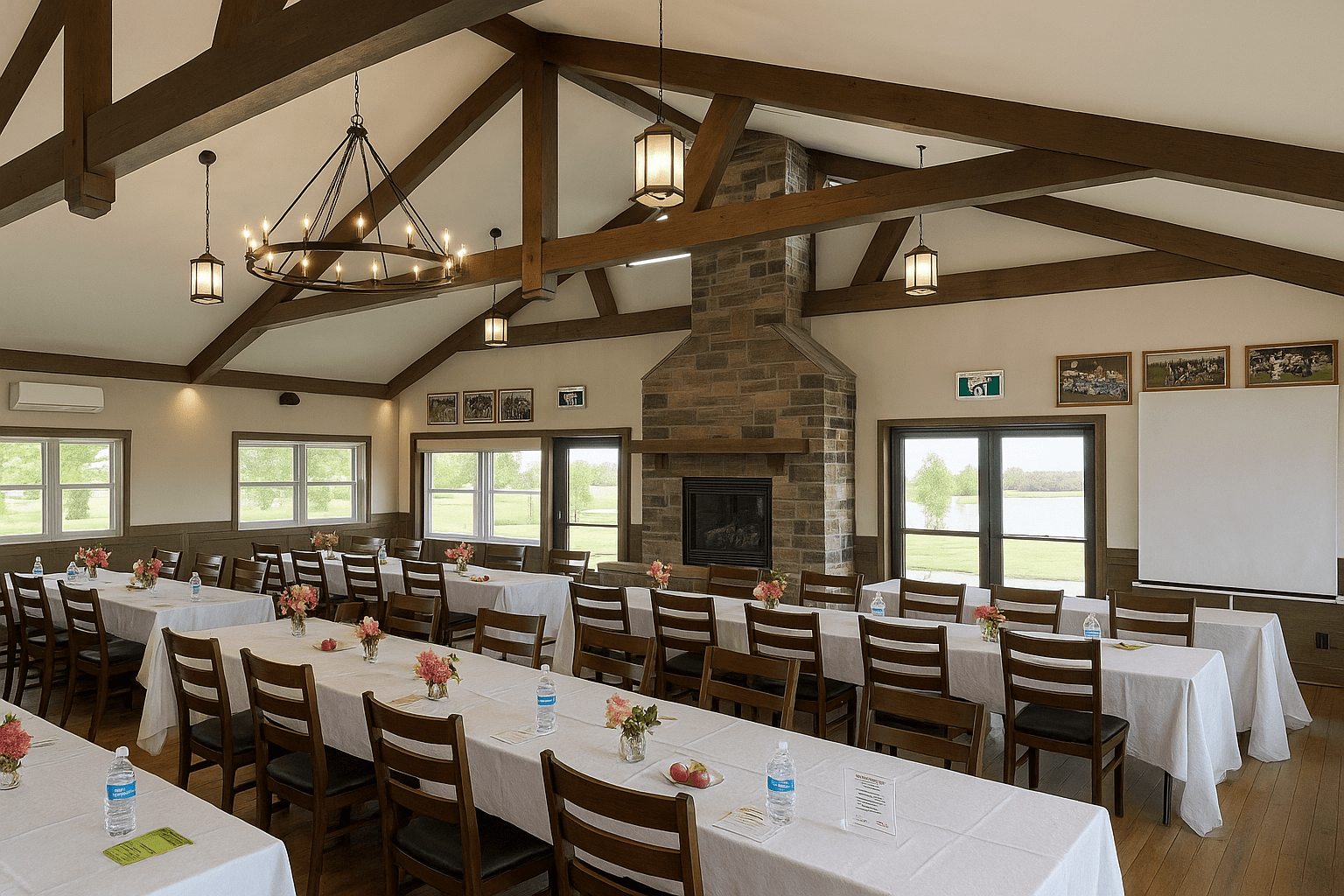
The single biggest factor in how a wedding dinner actually tastes is not the caterer’s skill. It’s the kitchen they’re working out of on the day. Outside catering at a venue without a real kitchen means food prepared at one location, transported to another, and held warm or cold until service. The skill of the caterer matters; the conditions they’re cooking in matter more.
Wedding venues with a kitchen on-site solve this differently. Food is prepared in the same building it’s served from. Plates leave the line and reach the table within minutes. The skill of the caterer translates directly to the plate without a forty-minute transit between cooking and serving.
What “working kitchen” actually means
Venue listings use “catering kitchen” loosely. The phrase covers anything from a fully equipped commercial kitchen to a glorified delivery hatch with two warming ovens. For a wedding, the difference matters.
A real working kitchen at a wedding venue has, at minimum:
Commercial gas or induction range with at least four burners
Commercial oven capacity for the guest count (typically two convection ovens or larger)
Refrigeration sized for the day’s ingredients (walk-in or large reach-in fridges)
Prep counter space for plating to scale
A plating pass that can move dinners to servers efficiently
Dishwashing capacity to handle the meal’s glassware and china
Access to water, gas, and 220-volt electricity at the line
A pretend kitchen has none of those things and instead has a few hot-holding cabinets that food trucks unload into when they arrive. Pretend kitchens are common at venues built as event halls without catering infrastructure. The food at those venues can still be good. It just can’t be as good as the same chef would produce if cooking on-site.
Why kitchen access matters for the food
Three things change when the food is cooked at the venue rather than transported in.
Temperature. Plated dinners served at the correct temperature taste meaningfully better than the same dish served lukewarm. Food held in hot-cabinets for an hour develops a texture change that even good caterers can’t fully prevent.
Timing flexibility. Receptions run late. Toasts run long. The dinner schedule on a wedding day rarely matches the schedule the caterer was given two weeks earlier. A kitchen on-site can adjust within fifteen minutes. A caterer driving food in from elsewhere has to coordinate arrival times and can’t flex easily.
The kitchen team is part of the day. Chefs who work on-site, who can see the room, who can adjust pace based on what they observe, deliver a better meal than chefs cooking blind from forty minutes away. The visual and audio feedback loop matters more than most couples realise.
Why kitchen access matters for the budget
Off-site catering at a venue without a kitchen typically adds 15 to 25 percent to the catering cost. The caterer charges for transport, equipment rental, staff travel time, and the risk premium of cooking remotely. Some of that cost is unavoidable. A venue with a real kitchen on-site removes most of it.
The trade-off: kitchen-equipped venues often work with a single in-house chef or a short list of preferred caterers rather than the full open market. If you have a non-negotiable caterer in mind, ask about the venue’s policy on outside catering before booking.
In-house catering versus preferred caterers
Three models are common at wedding venues with a kitchen on-site:
In-house catering. The venue employs the chef and the kitchen team. Menu is set by the venue, with customisation within their range. Costs are bundled into the rental.
Exclusive preferred caterer. The venue works with one outside caterer who uses the kitchen as if it were their own. Menu options expand. Costs are slightly higher than full in-house but more flexible.
Preferred caterer list. The venue maintains a short list of three to six caterers who know the kitchen and have an established relationship with the venue. The couple picks from the list.
All three work. The wrong fit is a venue that has a kitchen but lets any caterer book in without a relationship — the chef doesn’t know the layout, the equipment, or the service flow, and the meal usually shows it.
Why do wedding venues with a kitchen produce better food?
Food cooked at the venue is served at proper temperature, on-time, and with the chef able to see the room. Food transported in from off-site loses heat during transit, has limited timing flexibility, and is plated by a team that hasn’t seen the dining room. The execution difference is consistent across most price points: same chef, better conditions, better plate.
Can outside caterers use a venue’s on-site kitchen?
Sometimes. The venue’s policy varies. Some venues run exclusively in-house catering. Some maintain a preferred-caterer list of chefs who know the kitchen well. A few allow any approved caterer to book the kitchen for an event. Before assuming you can bring your own caterer, ask the venue directly about their catering policy and whether the kitchen is open to outside teams.
How much does on-site catering at a wedding venue typically cost?
Per-guest catering costs at wedding venues with on-site kitchens in the Ottawa region vary with the menu, the service style, and the venue. All-inclusive packages bundle venue rental, kitchen access, catering, and bar service into a single per-guest figure. Always ask for a complete per-guest number with all service charges and gratuities included.
What kitchen features should you check during a wedding venue site visit?
The five features that distinguish a working kitchen from a delivery hatch: commercial range and oven capacity, refrigeration sized for the guest count, prep counter space for plating to scale, a plating pass that moves food to servers efficiently, and a clear flow between the kitchen and the dining room. Ask to walk the kitchen during the site visit, not just see it through a doorway.
Booking a site visit
If you’re comparing wedding venues with a kitchen near Ottawa, the site visit should include the kitchen, not just the ceremony space and the reception room. A working kitchen reveals more about how the venue runs an event than the brochure photos do.
Oakfield Park is a rural event venue and four-pitch rugby ground in Lanark County, about an hour from Ottawa.
It is owned and run by the Lanark Rugby Association, a registered not-for-profit. Every booking funds youth rugby, mentorship, and leadership programming in the county.
Multi-sport field rental near Ottawa for rugby, soccer, flag rugby, and ultimate. How a rugby-grade pitch handles multiple sports and what tournaments need.
Rural celebration venues near Ottawa for milestone birthdays, retirements, anniversaries, and family reunions. What scale, catering, and outdoor flexibility actually need to look like.
To provide the best experiences, we use technologies like cookies to store and/or access device information. Consenting to these technologies will allow us to process data such as browsing behavior or unique IDs on this site. Not consenting or withdrawing consent, may adversely affect certain features and functions.
Functional Always active
The technical storage or access is strictly necessary for the legitimate purpose of enabling the use of a specific service explicitly requested by the subscriber or user, or for the sole purpose of carrying out the transmission of a communication over an electronic communications network.
Preferences
The technical storage or access is necessary for the legitimate purpose of storing preferences that are not requested by the subscriber or user.
Statistics
The technical storage or access that is used exclusively for statistical purposes.The technical storage or access that is used exclusively for anonymous statistical purposes. Without a subpoena, voluntary compliance on the part of your Internet Service Provider, or additional records from a third party, information stored or retrieved for this purpose alone cannot usually be used to identify you.
Marketing
The technical storage or access is required to create user profiles to send advertising, or to track the user on a website or across several websites for similar marketing purposes.